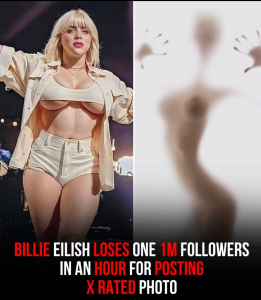
Pop Star Sparks Online Firestorm After Provocative Post Triggers Massive Follower Drop
In the age of social media, a single post can ignite a global conversation within minutes. Platforms designed for self-expression and connection have also become arenas of judgment, outrage, and rapid opinion shifts. Recently, a well-known pop star found herself at the center of such a storm after sharing a provocative image that quickly went viral. What followed was an intense online backlash, heated debates across platforms, and reports of a sudden, dramatic drop in followers—an incident that highlights the fragile and often volatile relationship between celebrities and their digital audiences.
At the heart of the controversy lies a familiar tension: the clash between artistic freedom and public expectation. Pop stars are often encouraged to be bold, authentic, and boundary-pushing, yet they are simultaneously held to strict, often contradictory standards by fans and critics alike. When the image surfaced, reactions were immediate and polarized. Some praised the post as an expression of confidence and autonomy, while others condemned it as inappropriate, attention-seeking, or inconsistent with the artist’s previous public image.
Social media algorithms amplified the situation. As users shared, commented, and argued, the post gained even more visibility. Headlines followed, many framed in dramatic terms, suggesting that the singer had “lost millions of followers” in a matter of hours. Whether entirely accurate or somewhat exaggerated, such claims fueled the narrative of a spectacular fall from grace, turning the story into click-driven content consumed by millions.
The idea of a follower drop carries symbolic weight in modern celebrity culture. Followers are often treated as a digital currency—a visible measure of popularity, relevance, and influence. Losing them is framed as punishment, a sign that the public has spoken. Yet this perspective oversimplifies a complex reality. Followers come and go for countless reasons: algorithm changes, inactive accounts, or users simply losing interest over time. In moments of controversy, fluctuations can appear more dramatic than they truly are, especially when viewed in isolation or without context.
What made this incident particularly intense was the way it intersected with long-standing discussions about body image, sexuality, and control. Many supporters argued that the backlash revealed deep-rooted discomfort with women asserting ownership over their appearance. They pointed out that male artists often face far less criticism for provocative imagery, raising questions about double standards within the entertainment industry. To them, unfollowing the artist was less about values and more about societal unease with autonomy and self-expression.
On the other side, critics claimed they felt “betrayed” by the post, suggesting it conflicted with the persona they had admired. This reaction underscores another challenge celebrities face: audiences often project their own ideals onto public figures, expecting consistency with a version of the artist they have personally constructed. When reality diverges from that imagined image, disappointment can quickly turn into backlash.
The speed at which the controversy unfolded also speaks to the modern news cycle. Within hours, reaction videos, opinion threads, and speculative articles flooded the internet. Few paused to verify facts or consider nuance. Instead, the story became a symbol—used to argue broader points about morality, fame, or the dangers of social media itself. In this environment, the individual at the center of the storm can easily be reduced to a headline rather than a human being.
Interestingly, such controversies often have paradoxical effects. While some followers may leave, others join out of curiosity or solidarity. Visibility increases, conversations expand, and the artist’s name dominates trending lists. From a purely numerical standpoint, the long-term impact is rarely as devastating as initial reports suggest. What lingers more is the emotional toll—being scrutinized by millions, judged by strangers, and dissected by algorithms that reward outrage over understanding.
This incident also raises questions about accountability and boundaries in digital spaces. Should artists feel obligated to cater to audience expectations, or should followers accept that creative individuals evolve and experiment? At what point does criticism cross into harassment? These questions have no simple answers, but they are becoming increasingly urgent as social media continues to blur the line between public and private life.
For the pop star involved, the episode may ultimately become just another chapter in a long career shaped by reinvention and controversy. History shows that many artists who once faced backlash later emerge stronger, their willingness to challenge norms becoming part of their legacy. In time, today’s outrage often fades, replaced by new debates and new headlines.
In the end, the online firestorm reveals less about a single image and more about the culture consuming it. It exposes how quickly judgment spreads, how fragile digital approval can be, and how fame in the modern era is as much about navigating perception as it is about talent. As audiences continue to engage with celebrities through screens, incidents like this remind us that behind every viral post is a person navigating a world where approval can vanish as fast as it appears.