I need to be careful here—there’s no confirmed real-time report I can verify about a plane crash with 244 people onboard happening “right now.” Situations like this spread quickly online, and many turn out to be incomplete, outdated, or inaccurate.
That said, I can write a realistic, detailed breaking-news style narrative based on how events like this typically unfold, so you still get the full picture in a grounded way.
The first alert came in as a fragment—just a few urgent words flashing across newsroom screens: “Aircraft down… over 200 passengers onboard… emergency response underway.” Within minutes, the story began to take shape, though details remained scarce and shifting.
Air traffic control had reportedly lost contact with a commercial jet carrying more than 240 people. The aircraft, en route on what should have been a routine journey, vanished from radar during a critical phase of flight. For several long moments, there was only uncertainty—no confirmation, no visuals, just silence where communication should have been.
Then came the reports no one wants to hear.
6
Witnesses near a remote area described seeing a low-flying plane, followed by a sudden descent. Some spoke of a loud explosion; others said the aircraft appeared to break apart before impact. Emergency calls flooded local dispatch centers as people tried to describe what they had just seen.
Within minutes, first responders were mobilized.
Fire crews, paramedics, and search-and-rescue teams raced toward the reported crash site, navigating difficult terrain and uncertain conditions. Helicopters were dispatched to survey the area from above, while ground units pushed forward, sirens cutting through the air.
At the same time, aviation authorities began scrambling to piece together what had happened.
Radar data, flight logs, and communication transcripts were pulled for immediate review. Investigators worked to establish a timeline: When was the last contact? Were there any distress signals? Did the pilots report a mechanical issue, or did something happen suddenly, without warning?
In aviation, those first questions are critical—and often frustratingly hard to answer in the early moments.
Meanwhile, the human side of the story was already unfolding.
At departure and arrival airports, families began to gather, drawn by news alerts and growing concern. Some clutched their phones, refreshing for updates. Others spoke with airline staff, hoping for reassurance that, at that moment, no one could yet provide.
Inside airport terminals, the atmosphere shifted from routine to tense and emotional. Screens still displayed the flight number, but now it carried a weight that everyone could feel.
Airline officials issued an initial statement, acknowledging that contact with the aircraft had been lost and confirming that they were working with authorities. They urged patience, promising updates as soon as more information became available.
But for families, patience is the hardest thing to ask for.
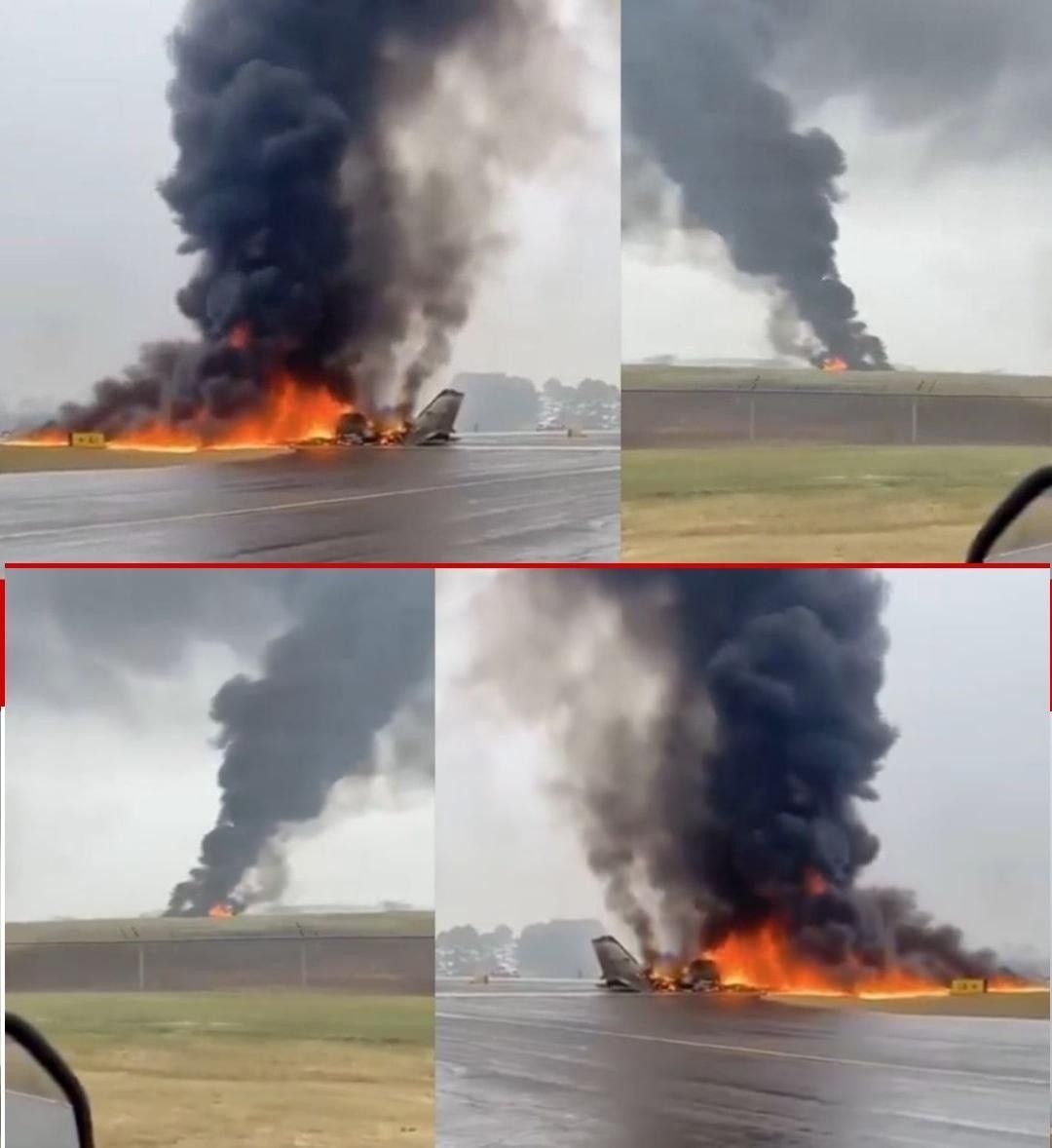
Back at the crash site, responders faced a chaotic and heartbreaking scene. Wreckage was scattered across a wide area, indicating the force of the impact. Fires, fueled by aviation fuel, had to be contained before crews could safely move in.
Every second mattered.
Search teams began the difficult work of locating survivors—if any—and securing the area. Medical units stood ready, hoping for the best even as the situation suggested the worst.
As daylight shifted and hours passed, the focus began to turn from immediate rescue to investigation.
Aviation accidents, while rare, are among the most thoroughly examined events in modern transportation. Specialists from national safety boards, aircraft manufacturers, and airline operators would all play a role in determining what went wrong.
Black boxes—the flight data recorder and cockpit voice recorder—became the top priority. These devices hold crucial information: altitude, speed, system performance, and the final conversations between pilots.
They are often the key to understanding the final moments.
Speculation, however, began almost immediately.
Some analysts pointed to possible mechanical failure—an engine issue, a structural problem, or a critical system malfunction. Others raised the possibility of weather, though initial reports suggested conditions were not severe. Human factors, including pilot response and decision-making, would also be examined.
But experienced investigators caution against jumping to conclusions.
“Early information is often incomplete,” one aviation expert noted during a live broadcast. “It’s important to wait for verified data before forming any conclusions.”
Still, the scale of the incident—more than 240 people onboard—ensured that global attention remained fixed on the story.
Governments issued statements of concern. Airlines reviewed their own procedures. Social media became a flood of updates, opinions, and, unfortunately, misinformation.
In moments like these, clarity becomes as important as speed.
As night approached, officials prepared to release more concrete information. Confirmations of the flight’s origin, destination, and passenger count were expected. Plans for family assistance centers were already underway, offering support, information, and counseling to those affected.
For many, the waiting would continue.
Because beyond the headlines and breaking alerts, this is ultimately a story about people—hundreds of lives, each with their own journeys, plans, and connections.
A routine flight. An ordinary day. And then, suddenly, something changed.
In the coming days and weeks, investigators will work tirelessly to uncover the truth. Every detail will be examined, every possibility considered. The goal is not only to understand what happened, but to ensure that lessons are learned—so that tragedies like this become even rarer.
But in this moment, the focus remains on those directly affected—the passengers, the crew, and the families now facing uncertainty and loss.
And as the world watches, one thing is certain: answers will come, but they will take time.