BREAKING NEWS: The War Has Just Begun 
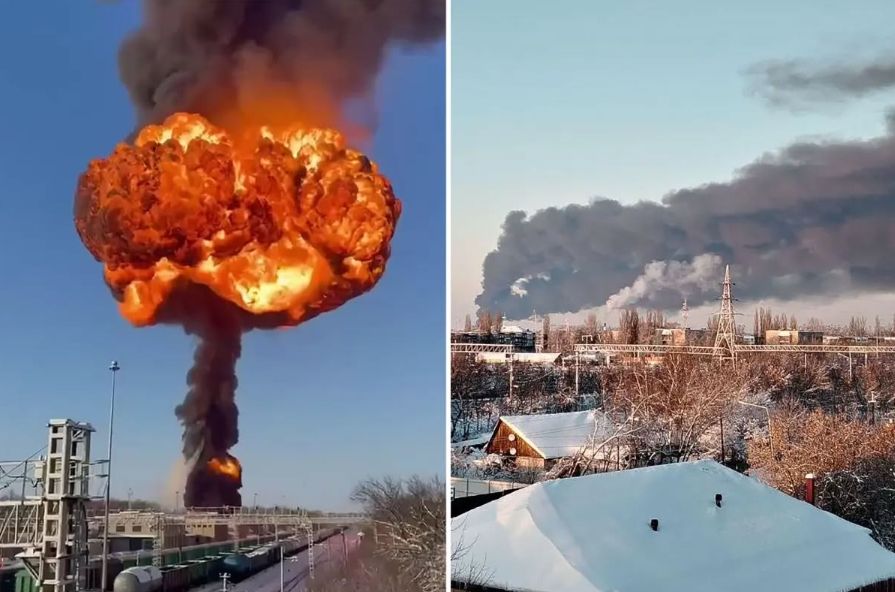
In the early hours before dawn, when most of the world was still asleep, a sudden and shocking escalation unfolded that has already begun reshaping the global landscape. Reports first emerged from multiple sources almost simultaneously—flashes of light across the horizon, the unmistakable sound of distant explosions, and a rapid surge of military movement that could no longer be dismissed as routine exercises. Within minutes, social media erupted with speculation, fear, and confusion. Within hours, officials confirmed what many had already begun to suspect: the war had begun.
The first strikes were swift and strategic. Key infrastructure targets were hit with precision, suggesting months—if not years—of preparation. Communication networks flickered and failed in affected regions, leaving millions scrambling for reliable information. Airports shut down abruptly. Highways clogged with vehicles as civilians attempted to flee areas rumored to be next. The silence that followed each explosion was often more terrifying than the blasts themselves—a heavy, uncertain pause filled with questions no one could yet answer.
World leaders quickly convened emergency meetings. Behind closed doors, decisions were being made that could alter the course of history. Public statements, however, were cautious and measured. Phrases like “monitoring the situation” and “urging restraint” dominated official responses, even as the situation on the ground spiraled further out of control. The gap between diplomatic language and the harsh reality unfolding in real time has rarely felt so stark.
Eyewitnesses described scenes of chaos and disbelief. In one city, families were seen gathering only what they could carry, abandoning homes not knowing if they would ever return. In another, emergency responders worked tirelessly, navigating damaged streets to reach those trapped or injured. Hospitals, already stretched thin, began preparing for an influx of casualties. Doctors and nurses braced themselves for long, grueling hours ahead, knowing that this was only the beginning.
Military analysts have pointed out that the speed and coordination of the initial offensive indicate a highly calculated operation. This was not a spontaneous outbreak of violence—it was a deliberate move, executed with chilling efficiency. Questions are now swirling about what triggered this moment. Was it a long-simmering conflict finally boiling over? A strategic gamble gone too far? Or a calculated attempt to shift global power dynamics in one decisive stroke?
Meanwhile, the digital battlefield has become just as intense as the physical one. Cyberattacks have reportedly targeted financial systems, government databases, and media outlets. Misinformation spreads rapidly, making it increasingly difficult for the public to separate fact from fiction. Videos, some real and others fabricated, circulate widely, amplifying fear and uncertainty. In this new kind of warfare, perception can be as powerful as reality.
Markets reacted almost instantly. Stock exchanges around the world saw sharp declines as investors scrambled to assess the potential impact. Oil prices surged amid concerns about supply disruptions. Economists warn that if the conflict continues to escalate, the consequences could ripple far beyond the immediate region, affecting economies and livelihoods on a global scale.
Amid the turmoil, there are also stories of resilience and humanity. Neighbors helping neighbors, strangers offering shelter, communities coming together in the face of uncertainty. In one particularly moving account, a group of volunteers formed a human chain to assist elderly residents evacuating a threatened area. These moments, though small in the grand scope of events, serve as powerful reminders of the human spirit’s capacity to endure even in the darkest times.
As the first day unfolds, the full scale of what lies ahead remains unclear. Military forces are reportedly mobilizing on multiple fronts. Alliances are being tested, and new ones may soon emerge. The possibility of escalation looms large, raising fears that what has begun as a regional conflict could expand into something far more widespread.
Experts caution against jumping to conclusions, noting that the situation is fluid and rapidly evolving. Yet even in this uncertainty, one thing is undeniable: a threshold has been crossed. The world is no longer watching a potential conflict—it is witnessing an active one.
For millions of people, life has changed in an instant. Plans, routines, and expectations have been shattered, replaced by a single, pressing concern: survival. Parents are trying to reassure frightened children. Loved ones are attempting to contact each other across disrupted networks. Every moment feels fragile, every decision carries weight.
As night falls again, the sounds of distant conflict continue to echo, a grim reminder that this is not a momentary crisis but the beginning of something far more enduring. The coming days will be critical. Diplomacy may yet find a way to intervene, or the conflict may deepen, drawing in more participants and expanding its reach.
The world watches, waits, and hopes—hopes that reason will prevail, that lives will be spared, and that this sudden descent into conflict will not define the future. But for now, the reality is unavoidable and stark: