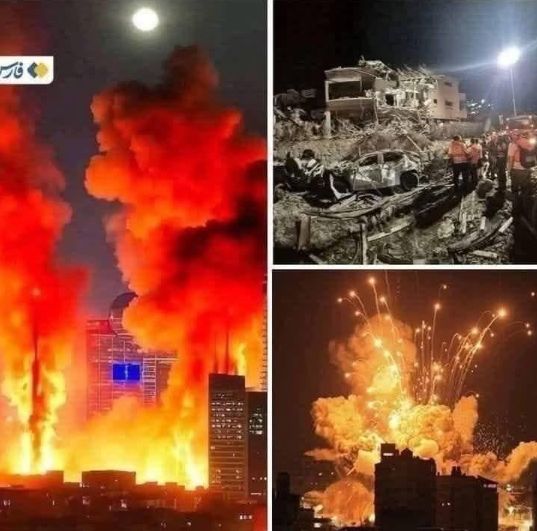
The world woke up today to a sentence no one ever truly believes they will hear in their lifetime: maximum global alert has been issued. In a matter of hours, the fragile balance that had held nations in cautious tension for years has shattered, sending shockwaves through governments, militaries, and ordinary households alike.
At approximately 04:17 GMT, multiple defense systems across several continents simultaneously detected coordinated activity—missile movements, cyber intrusions, and sudden communications blackouts. Within minutes, emergency protocols were activated. Airspace in key regions was locked down. Naval fleets were mobilized. Intelligence agencies scrambled to confirm what many feared but few dared to say out loud: this was not a drill, not a misunderstanding, but the beginning of a large-scale global conflict.
Officials were initially hesitant to use the word war. But as reports poured in—explosions near strategic installations, satellite disruptions, and the rapid deployment of military forces—there was no longer any room for ambiguity. Leaders addressed their nations in urgent broadcasts, their tones grave and uncharacteristically direct. The message was clear: the situation had escalated beyond diplomacy.
In major cities around the world, the reaction was immediate and visceral. Sirens echoed through streets as emergency systems were tested or activated for the first time in decades. People flooded grocery stores, forming long lines as they stocked up on essentials—water, canned goods, batteries. Traffic surged as families attempted to leave densely populated areas, unsure of what might come next. Social media became a chaotic stream of conflicting information, fear, speculation, and desperate attempts to reach loved ones.
In the financial world, markets plunged within minutes of the announcement. Trading was halted in several countries as volatility spiked to historic levels. Experts warned that the economic consequences of a prolonged conflict could rival or surpass those of any crisis in modern history. Oil prices surged, supply chains trembled, and global trade routes faced immediate uncertainty.
Meanwhile, behind closed doors, military strategists and political leaders raced against time. Emergency summits were convened, alliances tested, and lines of communication opened—even between longtime adversaries—in a last-ditch effort to prevent further escalation. Yet even as diplomats spoke of restraint, troops continued to move. Fighter jets patrolled contested skies. Warships took up positions in strategic waters. The machinery of conflict, once set in motion, proved difficult to slow.
Cyber warfare has already become a defining feature of this unfolding crisis. Major infrastructure networks—power grids, communication systems, transportation hubs—have reported disruptions. Some cities experienced temporary blackouts, while others struggled with interrupted internet and mobile services. Experts say this digital front may prove just as critical as any battlefield, with the potential to cripple nations without a single shot being fired.
As the hours passed, fragments of clarity began to emerge from the fog of confusion. Analysts suggested that the conflict had been building quietly for years—through economic tensions, territorial disputes, and a series of escalating provocations that, in hindsight, now seem like warning signs. But the speed and scale of today’s developments have taken even seasoned observers by surprise.
For ordinary people, the reality is both immediate and surreal. Schools have closed in several regions. Flights have been canceled or rerouted. Governments are issuing guidance on emergency preparedness, urging citizens to remain calm while also preparing for potential disruptions. In some areas, reservists are being called up, and military checkpoints have appeared along major roads.
Humanitarian organizations are already bracing for impact. They warn that if the conflict spreads, millions could be displaced, and access to food, water, and medical care could become critical issues in affected regions. Appeals for international cooperation have been issued, but the effectiveness of such efforts remains uncertain in a rapidly deteriorating geopolitical landscape.
Amid the tension, there are also moments of unity. Communities are coming together, neighbors checking on one another, volunteers stepping forward to help those in need. In hospitals, doctors and nurses prepare for the possibility of mass casualties, even as they continue to provide care under growing pressure. Across the globe, people are watching, waiting, and hoping that this moment does not spiral into something even more devastating.
Leaders continue to emphasize that all options are still on the table, including de-escalation. Backchannel negotiations are reportedly underway, though details remain scarce. The coming hours and days will be critical in determining whether this conflict can be contained or whether it will expand into a broader and more destructive confrontation.
For now, the world stands at a crossroads. The phrase “the war begins” is no longer a headline from history books or a distant echo from another era—it is the present reality. The uncertainty is profound, the stakes immeasurable.
And as night falls in some parts of the world and dawn breaks in others, one question lingers above all: how far will this go?